How Fax Technology is Evolving in 2025
You might be thinking, “Fax? Isn’t that ancient tech?” Well, guess what? Fax machines haven’t gone extinct yet—in fact, fax technology is evolving in surprising ways in 2025. While many assumed fax would fade away in the digital age, it’s quietly transforming and adapting to modern needs. In this article, we’re going to explore how fax technology is not just surviving but thriving in 2025, thanks to innovation and integration with modern digital tools. Ready to dive in? Let’s unpack this fascinating evolution step by step.
How Fax Technology is Evolving in 2025
Fax technology might sound like something from your grandparents’ office, but don’t be too quick to write it off. While the world around us has embraced cloud storage, instant messaging, and AI tools, fax has quietly evolved behind the scenes—especially in sectors where secure and verified document transmission is non-negotiable. In 2025, fax isn’t about dusty machines anymore; it’s about digital transformation, where old-school reliability meets next-gen efficiency. It’s still widely used in industries like healthcare, legal services, finance, and government, where compliance with strict regulations often mandates verifiable and encrypted data exchange.
The concept of faxing has been reborn through modern digital infrastructure. Gone are the days of waiting by the machine, listening to the high-pitched screech of a connection. Today’s fax services are sleek, often paperless, and integrated into the cloud. Fax Over IP (FoIP), mobile fax apps, and email-to-fax gateways have turned a traditionally analog process into something that fits neatly into our fast-paced digital ecosystems. In fact, many businesses now rely on digital fax solutions to meet regulatory requirements like HIPAA, GDPR, and PCI DSS, thanks to their ability to secure transmissions with encryption and digital audit trails.
Beyond compliance, fax has maintained a surprising edge in convenience and trust. In places where internet reliability is shaky or cyber threats are high, fax provides a safer and more direct method of communication. For instance, doctors still use fax to exchange prescriptions or patient records because it ensures the message reaches the correct recipient with minimal tampering risk. Similarly, in law offices, signed documents sent via fax are considered legally binding in ways email often isn’t. This level of trust and authenticity, built over decades, keeps fax relevant even in a digitally saturated world.
What’s remarkable about fax in 2025 is how seamlessly it has blended into modern digital workflows. You no longer need a dedicated line or machine; you just need an app or web portal. Users can fax from smartphones, tablets, or even voice-controlled assistants. Documents can be faxed directly from cloud storage platforms like Google Drive or Dropbox. This shift is not only improving speed and user experience but also making faxing far more scalable for remote teams, mobile professionals, and hybrid workplaces. It’s not a question of whether fax is outdated—it’s how it’s being reimagined to thrive in today’s digital-first business world.
Why Is Fax Still Relevant in 2025?
- Unmatched Security in Data Transmission
Unlike email or instant messaging, fax technology still provides a direct, point-to-point transmission pathway that doesn’t rely on third-party servers or cloud relays. This dramatically reduces the risks of interception, tampering, or unauthorized access. In 2025, when cyberattacks are more sophisticated than ever, organizations trust fax because it minimizes vulnerability during data exchange. The implementation of end-to-end encryption and secure sockets in digital fax services further boosts confidence, especially for industries that handle sensitive records. - Regulatory Compliance with Industry Standards
Many businesses operate in highly regulated environments where data protection isn’t optional—it’s mandatory. Sectors like healthcare, law, and finance must comply with laws such as HIPAA, GDPR, PCI DSS, and SOC 2. Fax technology provides traceable, auditable, and secure communication channels that meet these compliance demands. Digital fax solutions generate timestamps, confirmation receipts, and access logs, giving organizations the verifiable documentation they need to pass regulatory audits without hassle. - Reliability in Areas with Poor Internet Connectivity
While cloud-based tools are great in high-bandwidth environments, they’re less reliable in remote regions or during network outages. Fax still works through traditional phone lines or cellular networks, which are often more stable than the internet in rural or underserved locations. During emergencies—natural disasters, power failures, or cyber disruptions—fax remains operational when digital systems go down, making it a vital backup communication method. - Preservation of Legal Validity for Documents
Signed faxed documents carry legal weight in many jurisdictions. Courts and legal bodies often accept faxed signatures as binding, and fax confirmations are used as evidence in litigation. Unlike email, which can be forged or spoofed, fax provides sender and receiver metadata, timestamps, and confirmation receipts, which make it more reliable when authenticity is questioned. In 2025, legal firms still prefer fax for contracts, affidavits, and client communication to ensure defensible, verifiable records. - Legacy System Integration in Enterprise Workflows
Many institutions use enterprise software systems that were built decades ago, and updating them is often expensive and risky. Fax remains compatible with these legacy infrastructures, offering simple API connections or built-in support within document management systems. Instead of disrupting entire workflows, businesses are layering modern fax technology on top of existing platforms to upgrade security and usability without undergoing complete digital transformation.
How Fax Technology is Evolving in 2025
| Aspect | Traditional Analog Fax | Modern Digital Fax (FoIP) | Cloud-Based Fax Services | Benefits in 2025 |
| Transmission Method | Uses telephone landlines for document delivery | Uses internet protocol (Fax Over IP) | Utilizes cloud servers and online portals | Eliminates phone lines, enables faster, cost-effective faxing |
| Hardware Requirements | Requires bulky fax machines, paper, ink, and modems | Digital fax cards or software-based systems | No physical hardware needed—only a device with internet | Reduces equipment costs and office clutter |
| User Accessibility | Limited to physical locations where machines exist | Accessible via connected computers | Access via smartphones, tablets, desktops, and browsers | Enables remote work, 24/7 access, cross-device convenience |
| System Maintenance | Frequent machine maintenance, paper jams, toner use | Occasional software updates and system integration | No hardware to maintain—automatic platform updates | Low operational overhead, no downtime due to hardware issues |
| Document Management | Hard copies stored in physical file cabinets | Digital copies stored on local networks | Auto-archiving to cloud with searchable indexing | Streamlined storage, easier retrieval and compliance logging |
The Top 5 Fax Technology Trends in 2025
Fax technology in 2025 is no longer just about sending documents—it’s about transforming how organizations handle information in a secure, intelligent, and eco-conscious way. One of the most exciting shifts is the integration of artificial intelligence into fax systems. AI is now used for document recognition, classification, routing, and even anomaly detection. Imagine a system that automatically detects sensitive patient data and routes it securely to a specific department, or flags a suspicious transmission for review. This kind of automation drastically reduces human error and saves time, making fax smarter, not just faster.
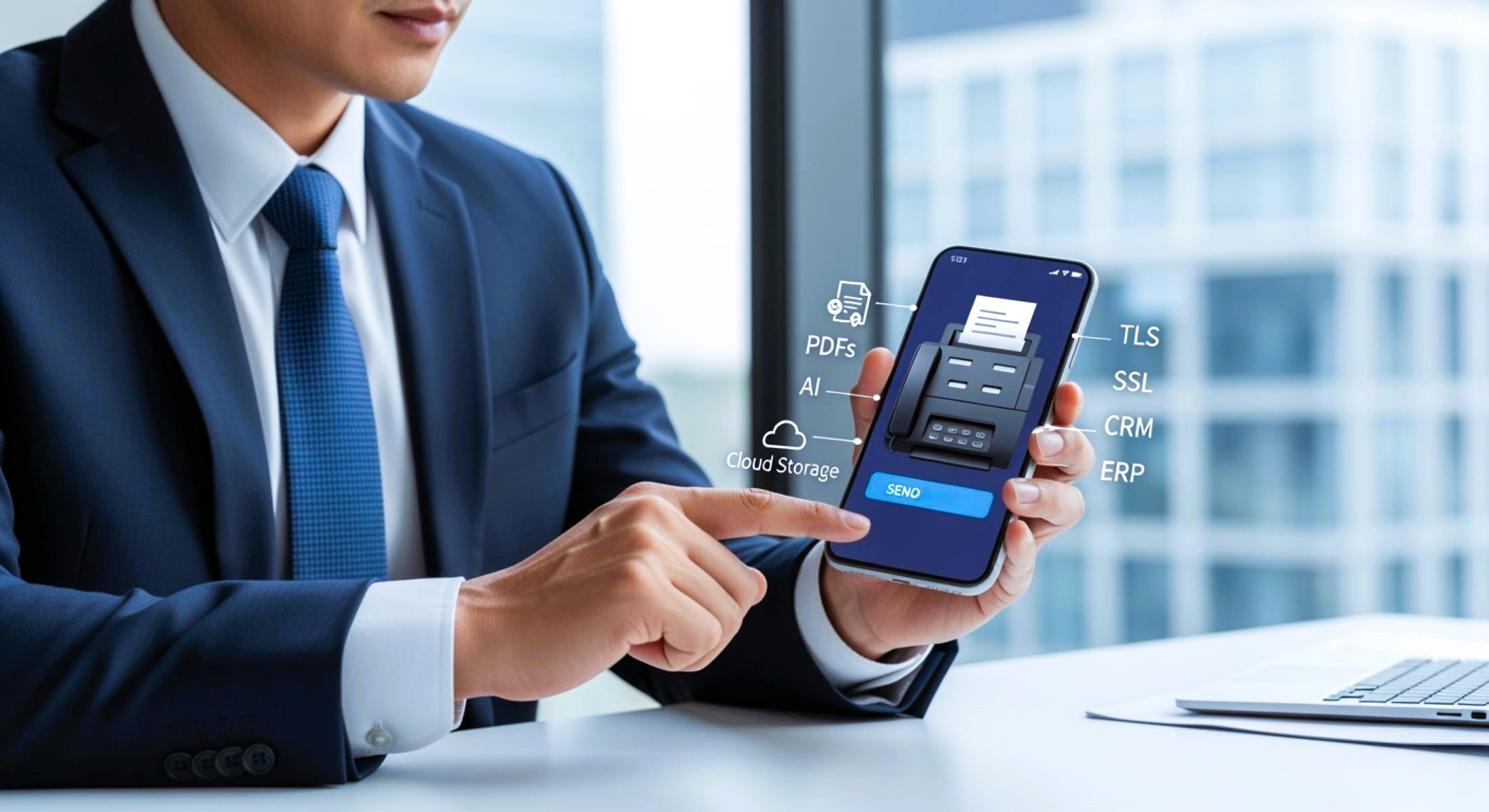
Another game-changer is the widespread use of mobile fax applications. With more employees working remotely or on the go, businesses need communication tools that travel with them. In 2025, mobile fax apps are streamlined, user-friendly, and loaded with features that were once limited to desktop systems. Users can scan documents using their smartphone cameras, attach PDFs from cloud storage, and send faxes with a few taps—no bulky equipment or cables required. This mobility has redefined fax accessibility and made it a modern convenience for both small businesses and enterprise teams.
Security is a top priority in today’s digital world, and modern fax technology is keeping pace with the demand for enhanced encryption. Unlike older fax systems that relied on analog lines and offered minimal protection, today’s digital fax services use advanced encryption protocols such as TLS, SSL, and end-to-end cryptographic methods. These updates ensure that documents sent over the internet remain confidential and comply with stringent security regulations. This evolution has been especially important in industries like healthcare and finance, where data privacy isn’t just expected—it’s legally required.
Perhaps one of the most impactful trends is how fax now integrates directly with enterprise software platforms like CRMs and ERPs. Instead of treating fax as a separate communication tool, businesses can now embed it into their existing digital infrastructure. This means contracts sent via fax can be automatically logged into customer records, or invoices can trigger automated entries in accounting systems. These integrations improve workflow efficiency, eliminate redundancy, and create a seamless bridge between traditional communication methods and modern productivity tools. At the same time, the push for environmental responsibility has led to the rise of eco-friendly faxing. By embracing cloud-based platforms, businesses are reducing their reliance on paper, ink, and physical storage—making faxing a greener, smarter part of their digital strategy.
AI-Powered Faxing: The Smart Fax Revolution
- Automated Data Extraction from Incoming Faxes
In 2025, fax systems powered by artificial intelligence can automatically recognize and extract relevant information from documents the moment they’re received. Whether it’s a patient’s name, a legal case number, invoice total, or a deadline date, AI parses unstructured data into usable digital fields. This reduces the need for manual data entry and speeds up document handling across departments. - Optical Character Recognition (OCR) with Contextual Understanding
Advanced OCR technology now understands context—not just characters. AI can distinguish between handwritten notes, printed text, and even stamps or watermarks. This allows businesses to digitize a wider variety of faxed documents with precision, including complex legal contracts, prescriptions, and multi-page forms, even if they include varied fonts, formats, or scanned signatures. - Automated Classification and Categorization
Modern fax systems equipped with AI automatically analyze the content of a fax and categorize it accordingly—such as legal, financial, or medical. This helps organizations create organized digital archives without human involvement, and ensures documents are stored under the correct compliance category for audit readiness. - Intelligent Routing to Departments or Individuals
AI doesn’t just read the fax; it knows where to send it. Based on keywords, sender identity, or document type, AI systems can forward faxes directly to the right department, team member, or workflow queue. For example, job applications go straight to HR, invoices to accounting, and prescriptions to the pharmacy team—all without any manual triage. - Fraud Detection and Anomaly Recognition
AI algorithms in fax systems now include machine learning models that flag unusual or suspicious patterns. If a fax contains forged signatures, mismatched data, or unauthorized sender credentials, the system can alert administrators in real time. This helps prevent fraud before it reaches critical systems and keeps sensitive workflows protected. - Smart Alerts and Real-Time Notifications
AI-driven fax platforms provide intelligent notifications that go beyond basic delivery confirmations. Users can receive alerts when a document contains missing fields, unusual values, or requires urgent action. This ensures that important issues don’t get buried under normal communication and boosts operational efficiency. - Natural Language Processing for Document Summarization
With NLP technology, AI can summarize long faxes and present the key points to users, saving time and reducing the need to read entire documents. For instance, in the legal sector, a multi-page deposition fax might be condensed into a brief summary with highlighted critical clauses or deadlines.
Mobile Faxing: Fax on the Go
| Feature/Aspect | Description | Use Case Example | Benefits | 2025 Relevance |
| Smartphone Integration | Mobile fax apps are fully integrated with iOS and Android devices, allowing users to fax from anywhere. | A freelancer sends signed contracts directly from their phone while traveling. | Eliminates need for physical machines; supports remote work. | Vital for on-the-go professionals and mobile-first teams. |
| Document Capture Tools | Apps now include built-in scanning, cropping, and image enhancement tools. | A real estate agent snaps a lease agreement with a phone camera and enhances clarity before sending. | Ensures documents are clean, legible, and professional. | Increases usability without needing third-party tools. |
| Cloud Storage Access | Seamless access to cloud services like Google Drive, Dropbox, and OneDrive from within fax apps. | A manager pulls financial reports from Google Drive to fax to auditors. | Enables efficient document retrieval and transmission. | Essential for businesses with cloud-based workflows. |
| Real-Time Notifications | Users receive push notifications for delivery success, failure, or incoming faxes. | A lawyer gets an alert when a crucial court document is received while in court. | Keeps users informed in real time, boosting responsiveness. | Improves reliability and communication efficiency. |
| Multi-format Compatibility | Supports PDFs, JPGs, DOCX, and more for faxing and receiving. | A healthcare provider faxes a lab report in PDF and receives a referral letter as a DOCX. | Offers flexibility in handling diverse document types. | Ensures compatibility with modern and legacy systems. |
Security: Keeping Fax Safe in a Digital World
In 2025, fax technology continues to stand strong as a trusted method for secure communication—especially in industries where data protection is non-negotiable. While email and cloud systems often fall prey to phishing attacks and malware, fax retains a reputation for resilience. But that doesn’t mean it’s standing still. Modern fax systems are now integrating advanced digital safeguards to ensure they meet the high-security expectations of today’s world.
At the heart of these advancements are robust encryption protocols. Every fax transmitted is now protected by end-to-end encryption, which means the contents are secured from the moment they’re sent until they’re received. This level of protection prevents interception, manipulation, or unauthorized viewing during transmission. Whether a company is sending sensitive medical records or legal contracts, the data remains shielded through multiple layers of encryption.
Equally important is the implementation of audit trails and detailed access controls. These features allow administrators to track exactly who sent and received faxes, when they were accessed, and by whom. Such transparency supports organizations in complying with global privacy regulations like HIPAA, GDPR, and others. The fax system becomes part of a company’s compliance infrastructure, providing clear documentation for security audits and legal oversight.
Moreover, fax servers are now often integrated with secure cloud storage and multi-factor authentication (MFA), making it even harder for unauthorized individuals to gain access. Companies are turning to fax not just for transmission, but also for secure storage and retrieval. In a landscape dominated by cyber threats and data breaches, the evolution of fax security represents a powerful defense mechanism in the digital communication toolbox.